For Our Neighbors · Jones County, TX
You shouldn't have to dig through industry websites to find out what's being built down the road. This page is for neighbors, county officials, school folks, and anyone in West Texas who wants the real story on what we're doing here — including how the project has changed since we first talked about it.
“I was born and raised in Texas. My family lives here. We're not parachuting in from out of state — we're building this project as neighbors. If you have a question or concern, the right place to send it is to us, directly. We'll answer it.”
What changed since we last talked
The original ReDew Anson plan was a 600 MW battery storage facility on its own. The project today is bigger and more complete — battery storage, on-site natural gas generation, and a data center campus on the same land, all sharing the cleared 600 MW interconnection at Phantom Hill. That changes some of what's on the site, what it sounds like, and what's permitted. Everything below reflects the project as it stands today.
Jump to a topic
01 · The Basics
Quick orientation before the detailed questions.
What are you building?
An energy campus in Jones County, Texas. Three things on one site, sharing one cleared 600 MW interconnection at the existing Phantom Hill 345 kV substation: long-duration vanadium flow battery storage, on-site natural gas generation, and a data center served by both. We hold and operate the campus; we don't sell it on once it's built.
Is this a power plant?
Partly. There is on-site natural gas generation, which is regulated as a power-generation facility and goes through full air permitting through the Texas Commission on Environmental Quality. It is sized to serve the data center on the same site — it is not a merchant power plant selling everything it makes to the grid. Battery storage and the cleared interconnection round out the campus. We'll say it plainly: this is more than batteries-only, and it's why the permitting and the conversation with the community matters more now than it did before.
Why all three together? Why not just battery storage like the original plan?
Because the customer for this site needs firm power — power that's reliable 24/7, not just when the grid says so. AI data centers can't accept dropouts. The grid alone, the battery alone, and on-site gas alone each have limits. The three together cover for each other: the grid does the heavy lifting, the battery firms it through ramps and short events, and on-site gas covers longer grid disturbances. That combination is what makes the site attractive to the data center tenant and, in turn, what makes the project economically sound for the community over the long run.
Is this solar? Wind?
No. The site has no solar panels and no wind turbines. ReDew Anson sits next door to ENGIE's operational solar farm, and we work alongside the generators that already exist on the ERCOT grid — we don't add new utility-scale solar or wind to this parcel.
Who's the data center tenant?
A hyperscale or AI infrastructure operator. We can't share the specific name until commitments are signed, and we will not pre-announce a tenant we haven't actually committed with. When that's signed, you will know who, and you will hear it from us before you read it anywhere else.
Why this specific piece of land?
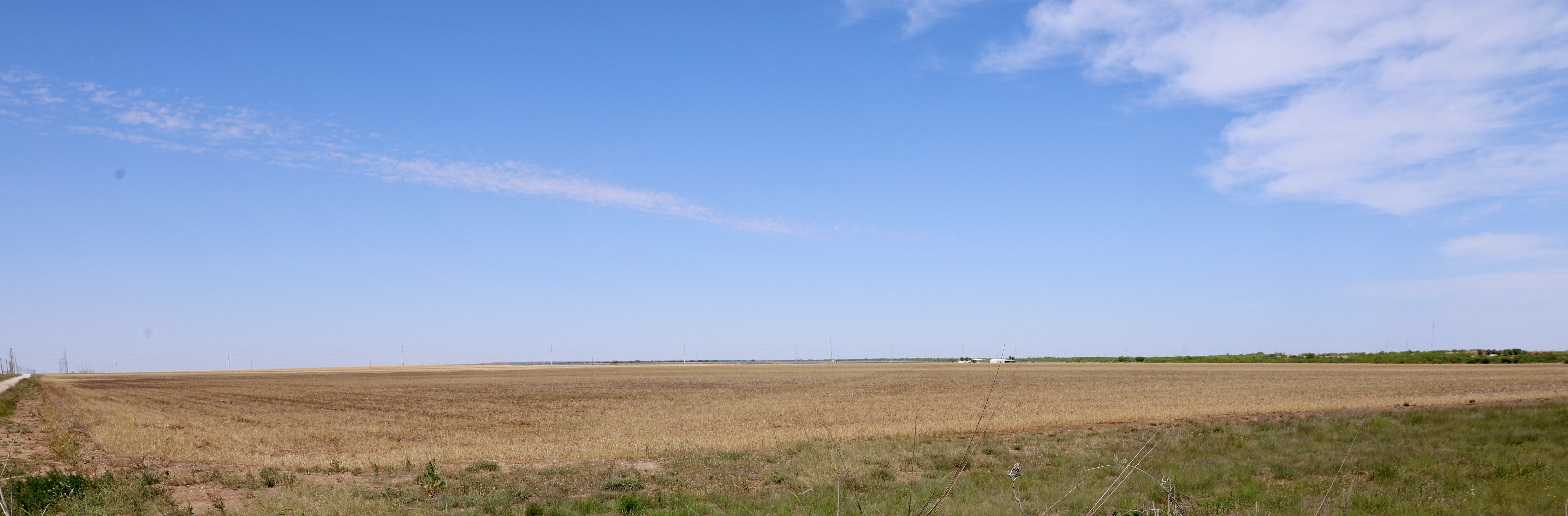
Two reasons. First, the land. This parcel has been dryland farming for decades, with yields running at roughly 25% of their historical pace for more than a decade — the water table dropped, the rainfall shifted, and the economics of cropping it went with them. We're not taking productive cropland out of production. We're putting underused land back to work. Second, the grid. The Phantom Hill 345 kV substation sits right next door — one of the most strategically valuable interconnection points in ERCOT West. The right land happens to be next to the right node on the grid. That doesn't happen by accident, and it doesn't happen often.
When does construction start and finish?
We're targeting notice-to-proceed in mid-2027. Because the campus is built in phases, you won't see it appear all at once: the first 50 MW block targets energization in 2028, with subsequent blocks following as the tenant fills capacity. The full envelope will phase in over several years.
02 · Safety & Air Quality
The questions that matter most. Honest answers, including where the campus model raises new ones we didn't have to address before.
Is there a fire risk from the batteries?
No. This project uses long-duration vanadium flow chemistry — not lithium-ion. The electrolyte is water-based. It doesn't burn. It cannot enter thermal runaway the way lithium-ion batteries can. The headlines you've seen about battery fires were lithium-ion projects. This is a fundamentally different technology, deliberately chosen for that reason.
Will the on-site gas generation produce air emissions?
Yes, regulated and permitted. Any combustion-based generator has emissions — we won't pretend otherwise. Modern gas generation runs cleaner than coal or diesel by a wide margin, and the equipment we're scoping is built around emissions controls that meet or exceed federal and Texas standards. The site goes through the Texas Commission on Environmental Quality air permitting process before construction starts. That process includes emissions modeling, ambient air quality analysis, and enforceable limits — not voluntary targets.
Will I be able to smell it?
Modern continuous-duty natural gas generation does not produce a noticeable exhaust smell at residential distances under normal operation. The set-back from the property line, the stack height, and the emissions controls are designed for that. If something is ever malfunctioning, that's a different conversation — and the local fire authority and county emergency services have a direct line to our operations team for exactly that reason.
What about flares?
This is not an oil-and-gas processing facility. Continuous-duty natural-gas generators don't routinely flare. Emergency pressure relief equipment is standard on any gas installation and is sized to be a non-event from the property line.
What's inside the battery tanks?
Vanadium dissolved in a water-based electrolyte, fully contained in sealed tanks engineered for zero release under normal operations. Vanadium is a stable, recyclable metal used in steel manufacturing for over a century. Secondary containment is built into the site design.
Will the data center produce air emissions of its own?
A data center is a building full of computers; the computers themselves don't produce combustion emissions. What data centers typically have on the back-up generation side is diesel or natural-gas standby generators — this campus replaces that standby need with the on-site natural gas generation already on the site. So instead of separate standby diesels under the building, we have one permitted, controlled gas generation system serving the load.
Who shows up if something goes wrong?
The local fire authority and Jones County emergency services are part of the project from the design stage forward. They get trained on the site, they receive the equipment information, and they have a direct line to our operations team. The site is fenced, monitored 24/7, and built to industrial safety standards.
03 · Look & Sound
A bigger campus than the original battery-only plan. Designed for West Texas, set back from neighbors, engineered to be quiet at the property line.
What does the campus look like?
A purpose-designed energy and compute campus. Architecture-driven building design — clean lines, deliberate materials, low profile, designed to complement the West Texas horizon rather than fight it. The footprint has three main elements: the battery storage system, the data center building, and the gas generation enclosure. All of it sits well back from the road and from property lines, on land already cleared of crops. Landscaped grounds. No towers. No spinning blades. A facility you can drive past and recognize as belonging here.
Will it block our view?
The buildings are low-profile by design and sit well back from the road. The long horizon lines that make this part of West Texas what it is — those stay open. The data center has a larger building footprint than batteries-alone would have had, but it is still a low-profile structure and not a tower.
Will we hear it?
There are three sound sources now: battery cooling, data center cooling, and the on-site gas generation. Each is engineered to property-line noise limits that meet rural Texas ambient standards, and the gas generation in particular is enclosed and acoustically treated. From most distances and directions, you will not hear the campus. From the closest perimeter, expect a low background hum during operation — comparable to an HVAC unit, not a highway. We won't pretend that combining three sound sources is the same as a single battery yard — the engineering target accounts for the cumulative level, not just each piece on its own.
What about lights at night?
Security lighting only, directed downward and shielded, designed to stay on the site and out of your sky. Data center perimeter lighting follows the same shielded-and-downward principle. We chose West Texas because the land works — not because we want to wash it in floodlights.
How big is the footprint?
The active footprint is larger than the original battery-only plan would have been — the data center building accounts for most of the increase. It still occupies only a fraction of the total parcel, with deliberate setbacks from neighbors and from the road, and the rest of the land stays open.
04 · Water
A real West Texas question. We are being deliberately careful with the answer because the tenant's cooling design isn't finalized yet — and we'd rather tell you what we know than over-promise.
Will this affect our drinking water or the aquifer?
The battery storage system uses essentially no water. The on-site gas generation we're scoping uses air-cooled radiators rather than evaporative cooling on the generation side. The data center's cooling design isn't fully locked yet — modern AI compute is trending toward liquid-cooled architectures that can be designed as closed-loop systems, but the specific approach gets finalized with the tenant. We do not draw on local wells or surrounding property's groundwater for any of it, and any water rights process goes through TCEQ regulation. We'll publish the final water profile when the tenant design is locked — before construction, not after.
Does building here help or hurt the water table?
The parcel has been worked as dryland farming for decades, with declining yields tied directly to a falling water table and shifting rainfall. Continuing to farm it would continue an extractive pattern on a depleted aquifer for diminishing returns. Taking the parcel out of marginal farming changes that pattern. The battery and gas generation portions don't draw on local water. The data center will have a defined water profile published before construction, and we are pursuing closed-loop cooling architectures specifically because we know the answer to this question matters.
Does the project use water during construction?
Yes, in limited amounts and not from local supply. Construction water for concrete, dust control, and site work is delivered from off-site sources. We do not pull from local wells, neighboring landowners, or municipal supply, and we do not draw the parcel's groundwater during construction.
What happens to rainwater and runoff on the site?
Site engineering keeps stormwater on the parcel. Grading, retention, and drainage are designed to contain rainfall and release it slowly, not dump runoff onto neighboring property or local drainages. The civil design is reviewed as part of permitting — this is not optional, and it is not a corner anyone gets to cut.
05 · Construction
A campus build in phases, not a one-shot job site. We take this seriously because it's the part you'll feel.
How long will construction take?
First-block construction is roughly 18 months from notice-to-proceed in mid-2027 to commercial operations in 2028. The campus then expands in subsequent phases as the tenant fills capacity. Each phase has its own concentrated construction window rather than a multi-year continuous job site.
Will heavy trucks tear up our roads?
We work with Jones County on route planning before construction starts, and we coordinate on road maintenance that results from project-related traffic. The road use agreement is a normal part of permitting. We don't want a finished campus sitting at the end of a torn-up road any more than the county does.
Construction noise and dust?
Standard daylight construction hours. Standard dust control practices on site access roads and laydown areas. We publish a community point of contact during construction — if something isn't right, we want to hear about it directly, not through a complaint chain.
Will construction workers come from out of state?
We prioritize Texas-based contractors and Texas trades wherever the work supports it. Specialized crews travel for projects like this regardless of where they're built — that's industry-wide — but the general construction labor leans Texas.
06 · Economics & Jobs
The economic case for the community is bigger now than it was under the original battery-only plan. Specific dollar figures get firmed up as the campus moves through development — the structure is what matters.
What does the campus bring to Jones County?
A project at this scale — a data center plus battery plus on-site generation — puts meaningful, long-term property tax revenue onto the Jones County tax rolls and into the local Independent School District. That revenue supports schools, roads, emergency services, and county operations for the life of the project. It does not come out of any homeowner's pocket. It is new revenue, paid by the project, for the community. A campus of this type also brings ongoing operational employment, which is structurally different from a build-and-leave construction site.
Will it create local jobs?
Yes — and more of them than the original battery-only plan would have. Construction employs a meaningful workforce during build phases, with subcontracting for Texas-based trades. Once operating, the campus supports ongoing skilled positions across battery operations, gas plant operations, data center facilities, and the supporting trades that come with a 24/7 industrial site — security, maintenance, electrical, mechanical, vendor support. That's a sustained employment footprint, not a project ribbon-cutting.
Will you hire locally?
Where the work fits, yes. Texas labor and Texas suppliers are the default — not because it sounds good, but because local crews who live in the community do better work and stay longer. Some specialized data center and gas plant operations roles require specific certifications, and we will hire for those where the qualified person comes from — but the working-trades day-to-day leans Texas, hard.
Will this hurt my property value?
No. The reasons are practical: low visual profile, architecturally designed buildings, engineered noise limits, no smokestack tower, no continuous heavy truck traffic after construction, no land subdivision around the site. The campus operates 24/7 quietly and continuously rather than spiking activity around shift changes or freight cycles. The land around the project stays usable for the things it has always been used for.
Will my electric bill go down?
We're not going to promise that. What we will say plainly: battery storage on ERCOT helps moderate the price volatility Texans saw in February 2021 and during hot-summer peaks. More storage on the system is a structural benefit for ratepayers over time, even if you can't draw a straight line from one project to one month's bill.
Are you getting tax abatements?
We engage with the county and the school district on the standard tools Texas uses to attract major capital investment. Any abatement structure is negotiated in public, on the record — not in a side deal. The goal is a fair outcome that brings the project to Jones County and makes the community a meaningful long-term beneficiary.
07 · Community Impact
Beyond the tax line items — the way this fits into the community.
What does this do for our schools?
The local ISD is one of the largest direct beneficiaries of property tax revenue from a campus like this. That funding can support facilities, teacher retention, programs, and stability over the long life of the project. With the data center added to the original battery plan, the assessed value — and therefore the school district revenue contribution — goes up materially.
Will this help with grid reliability?
That's a real part of the design. Battery storage at Phantom Hill is one of the most effective tools available to firm ERCOT against demand spikes and supply gaps. Texans remember February 2021 and the hot summer events. The configuration of this campus — storage in-series between the grid and the data center load — means the battery can serve grid reliability and the on-site tenant from the same asset.
Will you support the community beyond taxes?
Yes. The specifics get worked out in conversation with the community, not in a press release — but the principle is simple: if this project is going to benefit from being built here, the community deserves to benefit from us being here.
What about agriculture and ranching on neighboring land?
The project doesn't affect surrounding agricultural operations. No water draw on shared resources, no chemical drift, no field disruption. Ranching and farming continue as they have.
08 · End of Life
A fair question every neighbor deserves a clear answer to before the project gets built — not after.
How long will it operate?
Design life is 20+ years of active operation, with ongoing maintenance and component refresh over that period. Vanadium flow electrolyte doesn't degrade the way lithium cells do — the active material can be reused effectively indefinitely. Gas generation equipment has its own maintenance and overhaul cycle, similar to any industrial generation facility. Data center buildings outlive both, with interior equipment refresh on a much faster cycle than the building itself.
What happens when it's done?
A decommissioning plan is part of the project from the start, including financial assurance to cover equipment removal and site restoration. That assurance covers all three components — battery, gas generation, and data center buildings — not just the simplest of them. The community shouldn't carry that cost; the project does. That commitment is part of the permitting and approval process, not a handshake.
Is this going to leave a mess behind?
No. Vanadium flow systems are designed to be recyclable — most of the active material is recovered and reused rather than landfilled. Gas generation equipment is removed and recycled at end-of-life like any industrial generator. Data center buildings can be refit, repurposed, or removed depending on the long-term plan at that point.
09 · Who We Are
A Texas company, founder-led, accountable in person — same as it was when this project started, even as the project itself has grown.
Who owns ReDewable?
ReDewable Energy Company LLC is a Texas-registered, founder-led company. Talor Byington is the founder and Managing Member — Texas A&M graduate, with a background in Texas construction, development, and energy infrastructure. We're not a foreign owner, not a private-equity holding company, and not a developer parachuting in from out of state.
Will this project be sold to someone else?
No. The plan has shifted from "build and sell" to "build and operate." ReDewable holds and operates the campus over its life. We bring in capital partners and the tenant on long-term commitments rather than handing the project off at construction. The commitments made during development — including the community ones — stay with the project because we stay with the project.
Why did you change the project?
Because the demand for power changed. When this site was first secured, the plan was battery storage on its own. In the time since, AI compute has reshaped what Texas needs at this kind of cleared grid position — not just storage, but firm power for the data centers being built to support it. The cleared 600 MW interconnection at Phantom Hill is the most valuable single asset on this project, and the campus configuration is what gets that capacity to use rather than letting it sit on paper.
Why did you pick Jones County?
Because the grid needs storage here, the land works, the people are good, and Phantom Hill 345 kV is one of the most useful interconnection points in ERCOT West. The honest answer is that we looked for the right site for the project, and West Texas was the right answer.
If you're a neighbor, a county or city official, a member of the school board, a member of the press, or just somebody who lives here and wants to know more — we want to hear from you directly. Email us. We answer.
 ReDewable